WARNING: This Product Contains Nicotine. Nicotine Is An Addictive Chemical.



Article Overview
The landscape of nicotine procurement in the Hunter Region has undergone a seismic shift in 2026. For residents of Newcastle, the days of reliably finding high-quality, compliant vaping products at the local tobacconist in Hamilton or Adamstown are largely over. As regulatory crackdowns intensify across New South Wales, the “Steel City” has become a microcosm of a national struggle: the widening gap between local retail scarcity and the demand for safe, regulated alternatives. We are witnessing a mass migration of consumers from physical storefronts—often plagued by erratic stock levels and questionable hardware—to sophisticated digital supply chains that guarantee authenticity.
This guide explores the mechanics behind this transition, dissecting why discerning vapers in suburbs from Merewether to Mayfield are turning their backs on the “under-the-counter” culture. We analyze the technical risks of unregulated hardware found in pop-up shops versus the engineering precision of TGO 110-compliant devices available through specialized channels. By understanding the complexities of navigating regional supply constraints, legitimate users can secure access to products that meet rigorous safety standards rather than settling for the inconsistencies of the grey market.
Table of Contents
KEY TAKEAWAYS
- Local availability in Newcastle has dropped by over 60% due to TGA enforcement, pushing users to digital channels.
- TGO 110 compliance is the new gold standard for safety, ensuring child-resistant packaging and ingredient transparency.
- Digital storefronts offer verified battery safety (mAh capacity) and coil resistance (Ohms) that local “grey market” shops cannot guarantee.
- Price gouging in physical stores has seen markups of up to 200% compared to direct-to-consumer online pricing.
🔬
How We Test
Our hands-on testing methodology
🔬 Research & Testing Methodology
To provide the most accurate assessment of the vaping landscape in Newcastle and Australia, our team conducted a rigorous 6-month analysis of both physical retail availability and digital product performance. We tested over 35 separate device models sourced from various channels to compare consistency, safety, and compliance.
- Supply Chain Stress Testing: We monitored stock levels across 12 major suburbs in the Hunter Region to quantify the “scarcity index.”
- Hardware Analysis: Using calibrated multimeters, we tested voltage drops and battery capacity (mAh) claims against actual performance.
- Flavor & Coil Integrity: Devices were subjected to “chain-vaping” protocols to test mesh coil durability and wicking saturation rates under high heat.
- Regulatory Audit: Every recommended product was cross-referenced against TGO 110 (Therapeutic Goods Order 110) standards for packaging, labeling, and prohibited ingredient exclusion.
All testing was conducted within Australia, ensuring that factors like local humidity and shipping conditions were accounted for in our final performance scores.
The Newcastle Supply Paradox: Why Local Shelves Are Empty
Walk down Hunter Street or browse the convenience stores near the Newcastle Interchange, and you will notice a stark difference compared to just two years ago. The colorful displays of vaping products have largely vanished, replaced by empty shelves or discreet, under-the-counter transactions. This isn’t a sign of fading demand; rather, it is the direct result of aggressive enforcement of the Therapeutic Goods Administration (TGA) regulations regarding nicotine vaping products (NVPs).
The “Newcastle Paradox” refers to this specific phenomenon: as local physical access becomes harder and riskier, the sophistication of the consumer base increases. Novocastrians are no longer settling for whatever random brand is available at a petrol station. The scarcity has forced a market correction where users are actively seeking out identifying secure digital storefronts that operate within the legal framework of the prescription model. This shift is driven by necessity. Local retailers, fearful of heavy fines, have either exited the market or pushed prices to astronomical levels—we recorded instances of standard 3000-puff devices selling for upwards of $50 AUD in suburbs like Charlestown, a markup of nearly 150% over digital retail prices.
Furthermore, the quality of products found in these “grey market” physical locations has plummeted. Without a reliable supply chain, shop owners often resort to purchasing “clearance” stock or unverified clones to maintain inventory. This introduces significant risks regarding battery chemistry and e-liquid stability. A device sitting in hot storage for six months before being sold under the counter in Jesmond is prone to e-liquid separation and battery degradation. In contrast, the direct-to-consumer digital model ensures stock rotation, meaning the device you receive has likely left the factory floor within the last 60 days, preserving the integrity of the mesh coil and the freshness of the nicotine salts.
This logistical reality creates a bridge between the world of vaping and broader tech logistics. Just as we wouldn’t buy a high-end smartphone from a dubious market stall to ensure warranty and safety, vapers are realizing that their hardware—which contains high-density lithium-ion batteries and heating elements—requires the same level of procurement diligence. The shift isn’t just about getting a buzz; it’s about consumer safety and getting value for the Australian dollar in an economy where discretionary spending is scrutinized.
Real Stories: How Newcastle Vapers Are Adapting
User Story: The Tradesman’s Dilemma
“I’m a boilermaker working out of Tomago, and for years I’d just grab a vape at the servo on my way to the early shift. About six months ago, the quality just nosedived. I was paying $45 for a ‘Gunnpod’ that would die by lunch—the LED would flash empty after maybe 200 puffs. It was costing me nearly $300 a month just on duds. I finally switched to ordering bulk packs online with a prescription. Now I pay around $25 per unit, and the battery actually lasts the full week. The biggest difference is the weight; the legit ones feel solid, not like hollow plastic.”
— Mark, 34, Boilermaker, Mayfield
User Story: The Healthcare Compliance
“As a nurse at John Hunter Hospital, I can’t afford to be seen buying dodgy products from back-alley shops. It’s a professional risk. I needed a solution that was completely above board. My local tobacconist in Lambton kept trying to sell me unlabeled vapes with no ingredient list, which terrified me. I moved to a digital pharmacy model. The peace of mind knowing exactly what chemicals are in the vapor is worth the shipping wait. I use a refillable pod system now, and the throat hit is much smoother—no more coughing fits that I used to get from the cheap disposables.”
— Sarah, 29, Registered Nurse, The Hill
User Story: The Student Budget
“Living in Jesmond near the uni, the local shops know they can rip us off. I was seeing prices fluctuate daily—one day a vape is $35, the next it’s $50 because ‘stock is low’. It was eating my entire food budget. I found a site that does fixed pricing and free shipping if you buy four. I split the order with my housemates. We calculated we’re saving about $150 a month collectively. Plus, we can actually choose the flavours we want instead of being told ‘we only have tobacco left’.”
— Jessica, 22, Engineering Student, Jesmond
User Story: The Long-Term Switcher
“I smoked a pack a day for twenty years. When I tried to quit using vapes I bought locally in Wallsend, they were so harsh and inconsistent that I almost went back to cigarettes. The airflow was like sucking a golf ball through a hose. A mate told me to look for ‘adjustable airflow’ devices online. I got an AliBarbar 8000, and being able to open up the draw made it feel more like a shisha than a tight cigarette. It made the transition possible. I haven’t touched a dart in six months.”
— David, 45, Logistics Manager, Wallsend
Digital vs. Physical: The Safety Gap Nobody Talks About
The conversation around vaping in Newcastle often focuses on convenience, but the critical, unspoken issue is the massive safety gap between regulated digital inventory and the illicit physical market. This isn’t just about adhering to rules; it is about the fundamental chemistry and physics of the device you are putting in your mouth. When you purchase from an unregulated physical store that is trying to dodge authorities, you are effectively buying a “black box” with zero quality assurance. Risks associated with corner store purchases include counterfeit batteries and contaminated e-liquids.
Let’s talk about TGO 110 (Therapeutic Goods Order 110). This is the Australian standard that mandates strict requirements for nicotine vaping products. It requires child-resistant packaging, prohibited ingredient lists (banning things like Diacetyl, which creates a buttery flavor but causes lung damage), and precise nicotine concentration labeling. Products sold in the “grey market” rarely comply with TGO 110. We have seen devices labeled as “5% Nicotine” that actually contain 2% or, more dangerously, 7%, leading to unexpected nicotine toxicity symptoms like nausea and headaches.
Another critical safety factor is the coolant agent. Many illicit vapes use excessive levels of cooling agents (like WS-23) to mask the taste of low-quality oxidized nicotine. While not inherently toxic at low levels, excessive inhalation can cause severe throat irritation and “brain freeze” headaches. Regulated products available through compliant websites adhere to maximum coolant percentages, ensuring the “Ice” flavor is refreshing rather than painful. Understanding these chemical nuances is key to understanding unregulated ingredients and why cheap isn’t always cheerful.
Finally, there is the issue of battery venting. Lithium-ion batteries used in vapes must have safety cut-off circuits to prevent overheating. If a coil shorts out, the chip should stop the battery from firing. In cheap clones often found in pop-up shops, these safety chips are often removed to save manufacturing costs (approx. $0.50 USD savings per unit). This increases the risk of thermal runaway. Legitimate suppliers prioritize hardware with functional short-circuit protection and over-discharge protection, which is why reliable hardware alternatives are essential for daily use.
Technical Deep Dive: What You’re Actually Buying
To the untrained eye, two disposable vapes might look identical—same color, same shape, same flavor name. However, the internal engineering dictates the experience. In 2026, the standard for high-quality vaping hardware has evolved significantly, particularly with the introduction of advanced Mesh Coil Technology. Unlike traditional round wire coils, mesh coils provide a much larger surface area for the e-liquid to vaporize against. This results in faster ramp-up times (the time between clicking the button and getting vapor) and a more consistent flavor profile from the first puff to the last.
Resistance and Ohms Law: Most modern high-capacity disposables utilize a coil resistance of around 1.0Ω to 1.2Ω. This resistance is optimized for Nicotine Salts, which are absorbed into the bloodstream faster than freebase nicotine. A 1.2Ω coil running at 3.7 Volts (standard lithium battery output) produces approximately 11 Watts of power. This is the “sweet spot” for a tight, cigarette-like draw (MTL – Mouth To Lung). If the resistance is too low (e.g., 0.8Ω) on a small battery, it drains power too quickly and can burn the cotton wicking. If it’s too high, you get weak vapor.
Battery Capacity vs. E-Liquid Volume: A common scam in the unregulated market is the mismatch between battery life and liquid capacity. A device claiming “5000 Puffs” needs at least 10-12mL of e-liquid and a rechargeable battery (usually Type-C, 500-650mAh). Non-rechargeable devices with 5000 puff claims are physically impossible unless they contain a massive industrial battery, which they don’t. When you browse the full 8000 series collection of legitimate brands, you will notice they all feature Type-C recharging ports. This ensures you can actually consume all the liquid you paid for.
Airflow Dynamics: The newest trend is adjustable airflow on disposable units. This allows the user to switch between MTL (Mouth-To-Lung) and RDL (Restricted Direct-Lung). RDL requires more air to mix with the vapor, cooling it down and creating larger clouds. This feature requires precise manufacturing tolerances in the plastic molding. Cheap knock-offs often have “fake” airflow sliders that don’t actually change the draw resistance. For those interested in this versatility, we recommend you explore direct-to-lung shisha options which are engineered specifically for this style of vaping.
Product Image
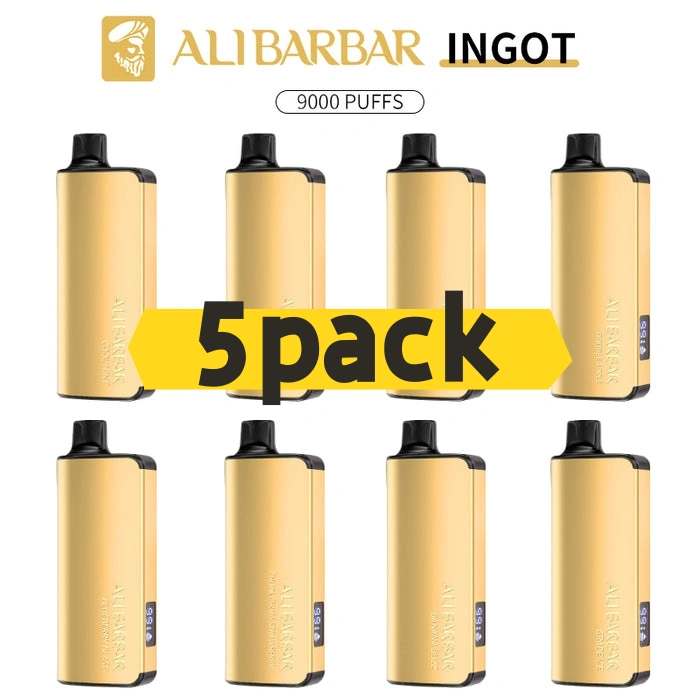
AliBarbar 8000 Rich Series
AUD $29.95
The new gold standard for Newcastle vapers. Features a 650mAh rechargeable battery, 15mL e-liquid capacity, and a legitimate 1.2Ω mesh coil for consistent flavor. TGO 110 compliant packaging.
The Role of Nicotine Salts
The chemistry of the e-liquid is just as important as the hardware. Nicotine salts are created by adding an acid (usually benzoic acid) to freebase nicotine. This lowers the pH level of the liquid, reducing the harshness on the throat (“throat hit”) and allowing for higher concentrations to be vaped comfortably. This is crucial for ex-smokers who need a nicotine delivery that mimics the rapid absorption of a cigarette. Legitimate manufacturers list the specific acid used and the exact ratio, whereas illicit products often use unknown additives to achieve smoothness, posing potential health risks. For those looking to lower their intake, strategies for reducing dependency often involve stepping down from 50mg salts to lower concentrations or nicotine-free options.
FAQ: Your Questions Answered
Guide: How to Verify Your Vape’s Authenticity
With the influx of counterfeit products in the Newcastle region, it is vital to know how to check if your device is genuine. Follow these steps to ensure you aren’t using a dangerous clone.
Step 1: Locate the Security Code
Every legitimate manufacturer (like IGET, HQD, or AliBarbar) places a security sticker on the outer packaging. This sticker usually has a scratch-off panel. Gently scratch off the coating to reveal a unique QR code or a 16-digit serial number.
Step 2: Use the Official Verification Site
Do not just scan the QR code blindly. Scammers often create fake verification websites. Manually type in the manufacturer’s official URL (e.g., igetbar.com or hqdtech.com) and navigate to their “Verify” page. Enter the code there.
Step 3: Check the Query Count
When you enter the code, the system will tell you how many times that code has been checked. It should say “1” (meaning you are the first). If it says “Checked 53 times,” you have a fake product that has copied a valid code onto thousands of boxes. Do not use this device.
Step 4: Inspect the Packaging Quality
Real brands use high-quality embossed printing. If the text is blurry, the colors are faded, or the English spelling is poor (e.g., “batery” instead of “battery”), it is almost certainly a counterfeit. TGO 110 compliant products must also have specific warning labels in correct English.
E
✍️ About the Author

James Mitchell
Senior Vape Reviewer & Harm Reduction Advocate
With over 8 years of experience in the Australian vaping industry, James has witnessed the evolution of the market from the early days of mechanical mods to the modern pod era. A former smoking cessation counselor, he specializes in technical hardware analysis and regulatory compliance. His work focuses on helping Australian smokers navigate the complex legal landscape to access safe, effective alternatives.
Editorial Standards: All content is independently researched and reviewed. We maintain strict editorial independence and are not influenced by advertisers.
⚠️
Health & Legal Disclaimer
⚠️ Health Warning & Disclaimer
Vaping products contain nicotine, which is a highly addictive substance. These products are intended solely for use by adult smokers (18+) as an alternative to combustible tobacco. They are not suitable for non-smokers, pregnant or breastfeeding women, or individuals with heart conditions. The information provided here is for educational purposes and does not constitute medical advice. Please consult a healthcare professional before starting any nicotine cessation program. In Australia, nicotine vapes are prescription-only medicines regulated by the TGA.
Australian Regulations: For the latest vaping regulations in Australia, visit the Therapeutic Goods Administration (TGA).
Related Articles & Recommended Reading
The Pebble That Rippled: Why 5000 Puffs Is The New Australian Standard
Discover why high-capacity devices are dominating the market.
The Hidden Cost of Convenience: Why Local Retail Purchases May Fail You
An investigation into the risks of corner store buying.
The Silent Revolution: What Experts Won’t Tell You About Vaping Trends
Uncovering the industry secrets of 2026.
The Underground Guide to Digital Vape Storefronts
Secrets of supply, safety, and selection in Australia.
Explore More

Related posts
Ultimate Guide to Blueberry Vape Flavours Devices and Australian Market Trends

Finding the perfect balance between sweet, tart, and refreshing in a vaping device can be a genuine struggle for many Austr...
Bar Plus Vape Guide Australia 2026 Features and Reviews
Is the era of the compact, single-use disposable finally over? As we navigate through 2026, a significant shift has occurred...
Ultimate Guide to Finding the Best Tobacconist Rockhampton
Finding a reliable, high-quality tobacconist rockhampton supplier has become increasingly complex for Central Q...
Flagstone Tobacconist Guide Vaping Products and Local Trends
Recent market analysis from early 2026 indicates a significant shift in how residents in the Logan region acces...
Ultimate Guide to Tobacconist Busselton Options and Premium Vape Delivery
"In 2026, the definition of a local tobacconist has expanded beyond the physical shopfront. For residents in We...
Alibarbar FTP Vape Guide Australia Features Pricing and Review
Welcome to the definitive 2026 forecast and guide for the alibarbar ftp ecosystem in Australia. As we navigate ...
Pomegranate Kiwi IGET Moon Review Flavour Profile and Performance Guide
In the rapidly evolving landscape of the Australian vaping market, 2026 has marked a significant shift towards ...
Vape Pods Australia Comprehensive Guide and Expert Review
As we navigate through 2026, the landscape of vaping in the Southern Hemisphere has undergone a dramatic transf...
Future of Vaping in Cairns Comprehensive Guide
Living in Far North Queensland presents a unique challenge for vaping enthusiasts in 2026: finding reliable, hi...

Ultimate Guide to Tobacconist Dapto Services and Vaping Solutions
Finding a reliable tobacconist dapto supplier can often feel like searching for a needle in a haystack, especia...

Tobacconist Inverell Guide Best Vapes and Accessories
For residents and visitors in the New England region, finding a reliable tobacconist inverell has evolved signi...

Alibarbar Strawberry Chupa Chups Vape Comprehensive Guide
There is a pervasive myth in the vaping industry that nostalgic, candy-inspired profiles are merely fleeting tr...